
What Curious is curious about
Curious is built on ideas as much as code. These are some of the ideas we’re exploring along the way. We’re learning in public.
Inventing on Principle
Bret Victor’s talk argues that creators need an immediate connection to what they are making, and that the gap between changing a thing and seeing the change is where ideas quietly die. We found ourselves asking a related question: if software creation is becoming increasingly instantaneous, why should publishing remain slow, fragile, or operationally complex? Curious exists to shrink the distance between “this is ready” and “someone else can experience it.” The closer those two moments become, the more natural publishing begins to feel.
Publishing Is a Human Activity
Before there were websites, there were books. Before books, there were manuscripts. Before writing, there were stories passed from one person to another. The medium keeps changing, but the act of making an idea available to someone else remains remarkably constant. That distinction is foundational to Curious. We aren’t interested in hosting as an end in itself. Instead, we’re interested in publishing, one of humanity’s oldest activities, expressed through today’s technology.
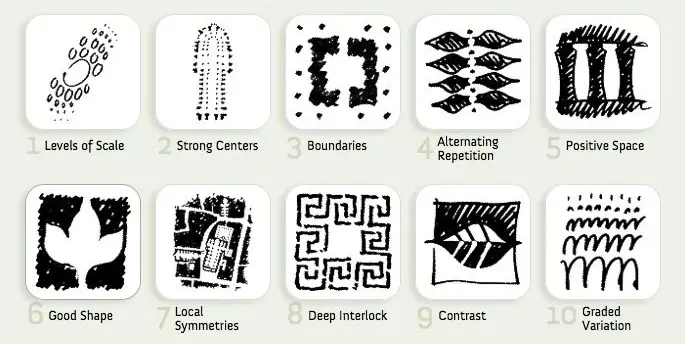
Christopher Alexander and his co-authors wrote a catalogue of small, named, reusable decisions about building, each one linked to the larger and smaller patterns around it. The shape of that book is what interests us: A system explained as a set of choices a person can hold in their head.
Good products (or systems) often evolve the same way. Rather than accumulating features, they discover patterns that solve the same problems again and again. Hopefully Curious grows through this kind of thinking: Not by becoming larger, but by becoming more coherent. Every new capability should strengthen the language of publishing rather than complicate it.